Pedir Orçamento

What is EBITDA in Accounting?
Ligamos para si gratuitamente
127158331738804062
6 Fevereiro, 2025Juegos de casino online Nº1 en España
13 Fevereiro, 2025What is EBITDA in Accounting?

Companies invest in long-term fixed assets (such as buildings or vehicles) that lose value due to https://tydarslogistics.com/ecs-nach-return-charges-what-they-are-and-how-to/ wear and tear. Working capital trends are an important consideration in determining how much cash a company is generating. If investors don’t include working capital changes in their analysis and rely solely on EBITDA, they can miss clues—for example, difficulties with receivables collection—that may impair cash flow. EBITDA is widely used in the analysis of asset-intensive industries with a lot of property, plant, and equipment and correspondingly high non-cash depreciation costs. In those sectors, the costs that EBITDA excludes may obscure changes in the underlying profitability—for example, as with energy pipelines.

Why Should You Use NTM EBITDA in Valuation?
EBITDA can be included in your financial statements, such as income statements, alongside other key financial figures. If you’re using Excel or Zebra BI, you can easily incorporate an EBITDA calculation formula into your spreadsheet. This allows for seamless EBITDA integration into your financial analysis and reporting process.
Showing You Understand EBITDA on Your Resume

In some cases, the formulas can generate two different EBITDA figures for the same company, as net income and operating income are calculated differently. This can be useful because these numbers indicate how the operation is financed, but are not directly relevant to the company’s ability to generate revenue through sales of what is ebitda their products or services. Along with other earnings measurements, it can provide key information about a company’s operations.
- This reexamination paints a more accurate and promising picture for potential buyers of your company’s worth and potential.
- In conclusion, EBITDA measures a company’s operational profitability by zeroing in on its core business functions.
- The EV/EBITDA multiple is useful when comparing the performance of one company to the others in its industry.
- EBITA is not as commonly used as EBITDA, which adds depreciation to the calculation.
- Since net income includes interest and tax expenses, to calculate EBIT, these deductions from net income must be reversed.
- In the 1980s, investors and lenders involved in leveraged buyouts (LBOs) started using EBITDA to determine whether a company could handle the debt that would come from the acquisition.
What is a Good EBITDA Margin by Industry?
A common method is to apply a multiple to EBITDA to determine company worth. An EBITDA contribution chart can be used to visually represent the EBITDA figure and its impact on the company’s valuation. EBITDA is a pivotal financial metric that provides an alternative perspective on company profitability. Its true strength lies in its ability to reflect the financial outcome of core operational activities, as it excludes certain non-operational elements that could cloud Travel Agency Accounting the picture of a company’s genuine performance.
Other EBITDA-Related Calculations to Know

It looks at a company’s earnings before interest and tax expenses, as the removal of the “D” and “A” indicates. EBIT measures a company’s operating income and helps you see if the company is making enough to stay in business. Operating income, on the other hand, includes depreciation and amortization but excludes interest and taxes. Each metric provides unique insights, with EBITDA being particularly useful for comparing companies’ core operational performance without the influence of financing and tax differences.
- It provides a consistent way to evaluate profitability across industries and is widely used in business valuation.
- EBITDA focuses on how well the company is running its operations, excluding expenses that aren’t directly related to day-to-day business, such as interest payments, taxes, and asset depreciation.
- But, if you’ve demonstrated strong and consistent growth, you may be able to negotiate a price based on some measure of “projected EBITDA” instead of the current year’s EBITDA.
- For example, if you have to make an interest payment on a business, this would not be included in your EBITDA, but this is still a very real payment that requires a cash transaction.
- With Mosaic, delve into your EBITDA to gauge growth trends, assess product/market fit, and gain deeper insights.
Accounts That Earn Compounding Interest
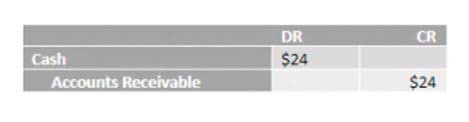
EBITDA is used to strip out the impact of these differences when comparing two companies. In this case, it’s possible that the business is servicing high debt or is suffering from rising capital and development expenses, and is thus using EBITDA as a way to distract from these challenges. Companies in asset-intensive industries have a high degree of investment in property, plant, and equipment (PPE), and therefore have correspondingly high depreciation costs. As such, EBITDA’s goal is to represent cash profit generated by company operations. EBITDA stands for Earnings Before Interest, Tax, Depreciation, and Amortization. It’s a measure of company profitability and is an alternative to net income (though in practice both should be used).

This metric is particularly useful for potential investors and buyers as it helps in comparing the profitability of companies within the same industry. This makes it a valuable tool for comparing the operational efficiency of different companies, regardless of their financing or tax situations. GAAP doesn’t standardize EBITDA, so each SaaS company might have a unique take on it.